Advertisement

Almost 3 million workers will get a pay rise in July, but wages can’t catch up with inflation

Source: AAP

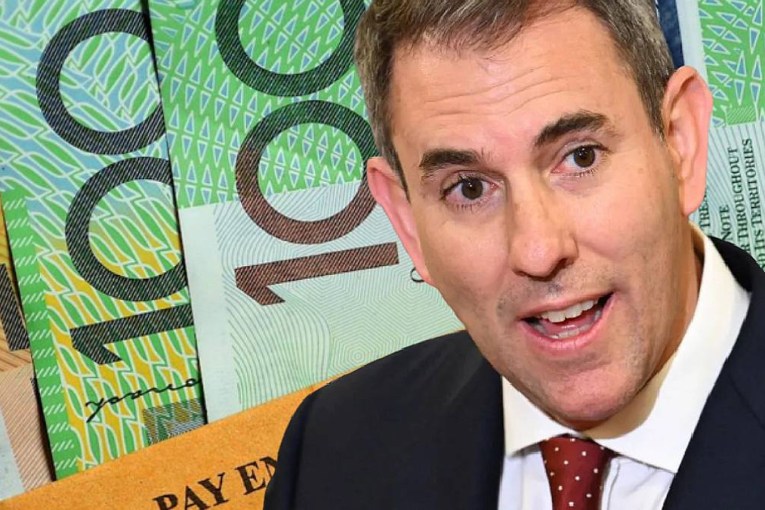
Almost 2.8 million of Australia’s lowest-paid workers will get a 4.75 per cent pay rise from July 1 this year, after the latest Fair Work Commission annual decision on award wages.

Around 100,000 of those workers – the very lowest paid workers on entry level and minimum pay – were singled out for an almost 6 per cent increase, as rising inflation had left some of them unable to pay their bills.

But even after those pay rises, the commission’s expert panel acknowledged low-paid employees still won’t earn as much in real terms as they did five years ago, when inflation spiked towards the end of the Covid pandemic.

The latest data included in the panel’s decision shows inflation has risen faster than average wages since June 2021 – resulting in a real wage cut of 5.9 per cent for average earners.

CPI = Consumer Price Index (inflation). WPI = Wage Price Index, which tracks movements in rates of pay for all employees. AWOTE = average weekly ordinary-time earnings. Note: All data is in original terms. AWOTE is published half-yearly for May and November. Source: ABS, Consumer Price Index, Australia, April 2026; Wage Price Index, Australia, March 2026; Average Weekly Earnings, Australia, November 2025,

Who benefits from this decision

Announcing the wage rises, Justice Adam Hatcher said this was a “particularly challenging” decision, especially due to the “wild card of the Middle East conflict” and its ongoing price shocks on fuel and other goods.

Amid so much uncertainty, the expert panel said:

We have concluded, regrettably, that it would not be practicable or responsible in the current uncertain circumstances to award a real wage increase for employees reliant on modern award wage rates that would be sufficient to close the real wage gap entirely.

The wage increase starting on July 1 will have the biggest impact on women, part-time and casual workers.

More than 60 per cent of the lowest paid workers are women, with an average age of 34.

More than 70 per cent work part-time. They mostly work in four industries: Accommodation and food services, health care and social assistance, retail, and administrative and support services.

A rise for the very lowest paid

Around 100,000 of the lowest paid workers will get a 5.97 per cent pay rise.

From July 1, the national minimum wage will be increased from $24.95 an hour to $26.44, or up from $948 a week to $1004.90 a week.

For those starting in entry-level jobs, the lowest award rate for the first six months will rise to $25.74 per hour, or $978.10 a week.

The panel said those increases for the lowest paid 100,000 workers will be followed up with two more rises in coming years.

Future wage rises coming for others

The expert panel said it plans to do more to close the gender pay gap in female-dominated professions.

Over the next few years, this will mean phased-in wage increases for children’s services employees, dental assistants, pathologists, disability home care workers, pharmacists and some other health professionals.

Nurses and flight attendants’ pay will also be examined over the next year.

Why wages are struggling to keep up

The expert panel said it didn’t want people to go backwards as inflation keeps rising in the months ahead, so chose a 4.75 per cent rise to at least keep people’s buying power at the level it was a year ago.

However, by my calculations – using their own figures – that still hasn’t happened.

Each year, the panel sets rates for around 21 per cent of Australian workers, on more than 120 different “awards”, which set out minimum terms and conditions of employment.

As a key reference point, the panel looks at the “C10 classification”: the award rate of pay for an entry level tradesperson in manufacturing.

This chart, from today’s decision, shows how inflation has continued to climb faster than the wages of an entry-level tradie, as well as someone on the national minimum wage (NMW).

CPI = Consumer Price Index (inflation), WPI = Wage Price Index, AWOTE = average weekly ordinary-time earnings. Note: All data is in original terms. AWOTE is published half-yearly for May and November.

That’s because as you can see – and as the panel itself acknowledged last year – inflation can rise all year, but award wages only increase once a year. This creates a significant fall in people’s real purchasing power between wage increases.

This time last year, the panel noted this had actually resulted in a 14.4 per cent drop in real earnings power for someone on an average award from June 2021 to June 2025.

How does the wage rise compare to inflation?

Inflation was lower than expected last month, partly thanks to fuel discounts that started in April to offset higher oil prices. Those discounts are due to end on June 30.

The monthly consumer price index rose 4.2 per cent in the 12 months to April 2026, down from 4.6 per cent in March.

Last month, Treasury forecast inflation would peak around 5 per cent in the middle of this year, driven higher by the Middle East war. That’s more than the 4.75 per cent award wage rise.

However, if the war ends and global oil prices ease, inflation is forecast to halve by mid next year, down to 2.5 per cent – back within the Reserve Bank’s target band of 2–3 per cent.

That would take the pressure off the bank to keep lifting interest rates, as it’s done three times already this year.

But Treasury also considered a worst-case scenario: that the war drags on and oil prices rise from around US$100 a barrel now to US$200. If that happened, inflation could peak at 7.25 per cent at the end of this year.

What it means for rates and the wealth gap

On balance, this year’s wage decision was conservative, as the expert panel acknowledged themselves by saying they regretted not lifting wages more.

So this decision should not add pressure on the Reserve Bank to lift interest rates in a fortnight, when its board next meets on June 15-16.

Low and middle income-earners have not caused Australia’s economic problems. In particular, they are not prime contributors to inflationary pressures.

Just days ago, the Australian Financial Review’s latest Rich List reported Australia produced another 12 billionaires in 2025. Collectively, the top 200’s wealth grew to $707.25 billion – up by 5.9 per cent in the past year.

Contrast that with a real wage cut of at least 5.9 per cent for average earners over the past five years.

Unless next year’s wage review breaks with its timidity and provides for a more reasonable increase, Australian workers are likely to keep seeing their buying power decline for yet another year.The Conversation

John Buchanan is a Professor in Working Life, Discipline of Business Information Systems at the University of Sydney

This article is republished from The Conversation under a Creative Commons licence. Read the original article

Want to see more stories from The New Daily in your Google search results?

  1. Click here to set The New Daily as a preferred source.
  2. Tick the box next to "The New Daily". That's it.
Topics: wages, Work
Advertisement
Stay informed, daily
A FREE subscription to The New Daily arrives every morning and evening.
The New Daily is a trusted source of national news and information and is provided free for all Australians. Read our editorial charter.
Copyright © 2026 The New Daily.
All rights reserved.