‘We are concerned’: China missile test alarms regional powers
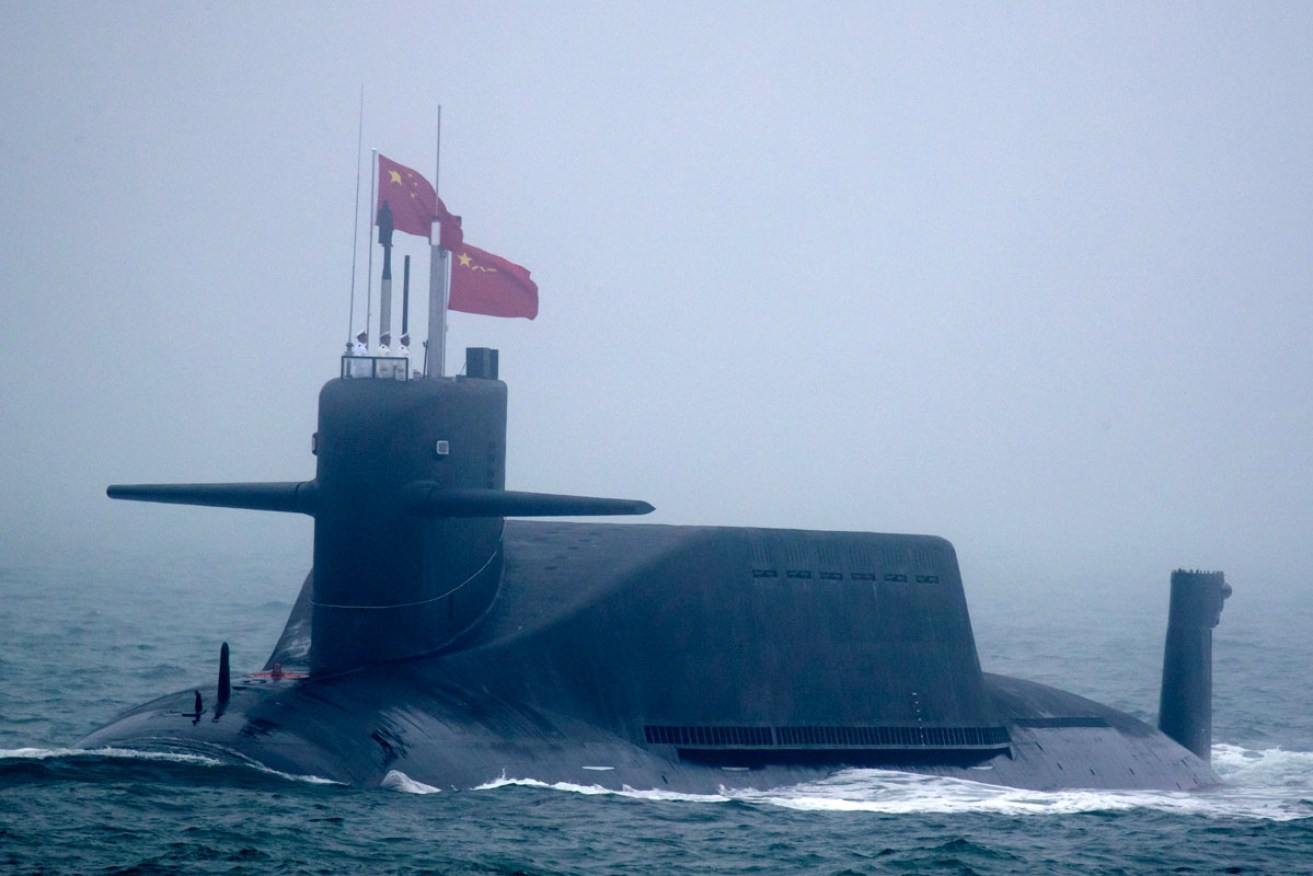
China fired the nuclear-capable long-range missile from a submarine in the Pacific. Photo: AP
A Chinese missile test in the Pacific has been labelled as deeply destabilising to the region, with Australia, Japan, New Zealand and Taiwan all raising concerns.
China fired a nuclear-capable long-range missile from a submarine in the Pacific on Monday, with the Australian government only given several hours’ notice about the test.
The missile is understood to have landed between Nauru and Tuvalu.
The test happened on the same day Australia signed a defence alliance with Fiji, only the fourth Australia has signed, with the $1 billion agreement aimed at countering Chinese influence in the region.
Defence Minister Richard Marles said there was concern about the test China had carried out.
“It’s been launched from a submarine, which also implies something about the range that China is building in terms of deploying nuclear capabilities, and all of that is obviously destabilising to the region, and that’s our concern,” he told Sky News on Tuesday.
“We are concerned about the test that’s taken place, and we’ve expressed that very clearly to China.”
Marles said the missile test was likely to come up at the next bilateral meetings between Australia and China, either at a ministerial or leader level.
Due to the level of preparation needed for such a test, the timing just hours after the agreement with Fiji was signed has been described as a coincidence.
But the Defence Minister said it reinforced the need for closer ties in the Pacific.
“What this says is how important it is that we are building the closest relationships that we can with our neighbours, but also our partners more broadly in our region and around the world,” he said.
Opposition defence spokesman James Paterson said the test was an intimidation tactic.
“It’s consistent with the People’s Republic of China’s approach to the region, which is not only destabilising and unwelcome, but also threatening and coercive, and part of the reason why they undertake these tests is for the demonstration effect,” he told ABC Radio.
“They want Pacific island nations, they want countries like Australia and others in the region to know they’re capable of exercises like these, and the reason why is they want to intimidate people in the region.”
Pacific Minister Pat Conroy said Australia had been monitoring a Chinese naval task force involved in tracking the launch.
He said the lack of advance notice by China about the test was inconsistent with global agreements.
“It’s not consistent with The Hague Convention on ballistic missile testing, which would require more notice and greater information provided to countries,” he told ABC Radio.
“Best practice is to follow the Hague Convention, which has longer notice, also provides information about a probable flight path, where the missile is expected to land, things like that, that actually provide a lot more transparency.”
The US monitored China’s test launch from a submarine of an unarmed intercontinental-range ballistic missile that landed in the southern Pacific Ocean, State Department spokesman Tommy Pigott said in a statement.
“We continue to urge China to engage in meaningful arms control discussions,” Pigott said.
Xinhua did not specify what type of missile China had launched. State-controlled tabloid Global Times, citing a military expert, said it was likely to have been the JL-3, China’s most advanced submarine-launched missile, which debuted at a military parade in 2025.
That missile could reach the continental United States from Chinese coastal waters, according to a Pentagon report.
“The US and others will be watching and analysing the test launch closely for any insights into PLA capability,” said Meia Nouwens, a senior fellow for Chinese security and defence policy at the London-based International Institute for Strategic Studies, referring to the Chinese military.
Mark Douglas, an analyst at New Zealand-based ship-tracking firm Starboard Maritime Intelligence, said the test would have been planned long in advance but the timing of China’s notification was “interesting, to say the least”.
Nouwens said China could be seeking to send a signal of its discontent about the Australia-Fiji agreement.
“That said, the launch could be counterproductive and negatively affect China’s image among countries in the South Pacific,” she said.
Taiwan’s presidential office called the test an attempt by China to intimidate the international community.
A senior Taiwanese security official said on Monday that Taiwan was tracking an “upward trend” in Chinese naval movements during the peak military exercise season, including joint drills with Russia.
New Zealand Foreign Minister Winston Peters called the test “an unwelcome and concerning development”.
“We, like our neighbours in other Pacific countries, have no interest in China using the South Pacific as a testing site for missile capability,” he said.
Japan said when it was notified of the upcoming launch it had expressed “our grave concern” over the Chinese military’s increased activity and urged China to reconsider.
The test comes as Prime Minister Anthony Albanese ramps up diplomatic efforts in the Pacific.
Albanese landed in the Solomon Islands on Tuesday ahead of one-on-one talks with new prime minister Matthew Wale on a treaty.
An alliance with Papua New Guinea, also known as the Nakamal Agreement, will come into effect on Wednesday.
Albanese will host PNG’s prime minister, along with leaders from Tonga and Samoa in Brisbane, also on Wednesday, as part of Pacific talks.
–with Reuters
Want to see more stories from The New Daily in your Google search results?
- Click here to set The New Daily as a preferred source.
- Tick the box next to "The New Daily". That's it.