Salesmen and substitutes gave snake oil a bad rap, a warning for the PM

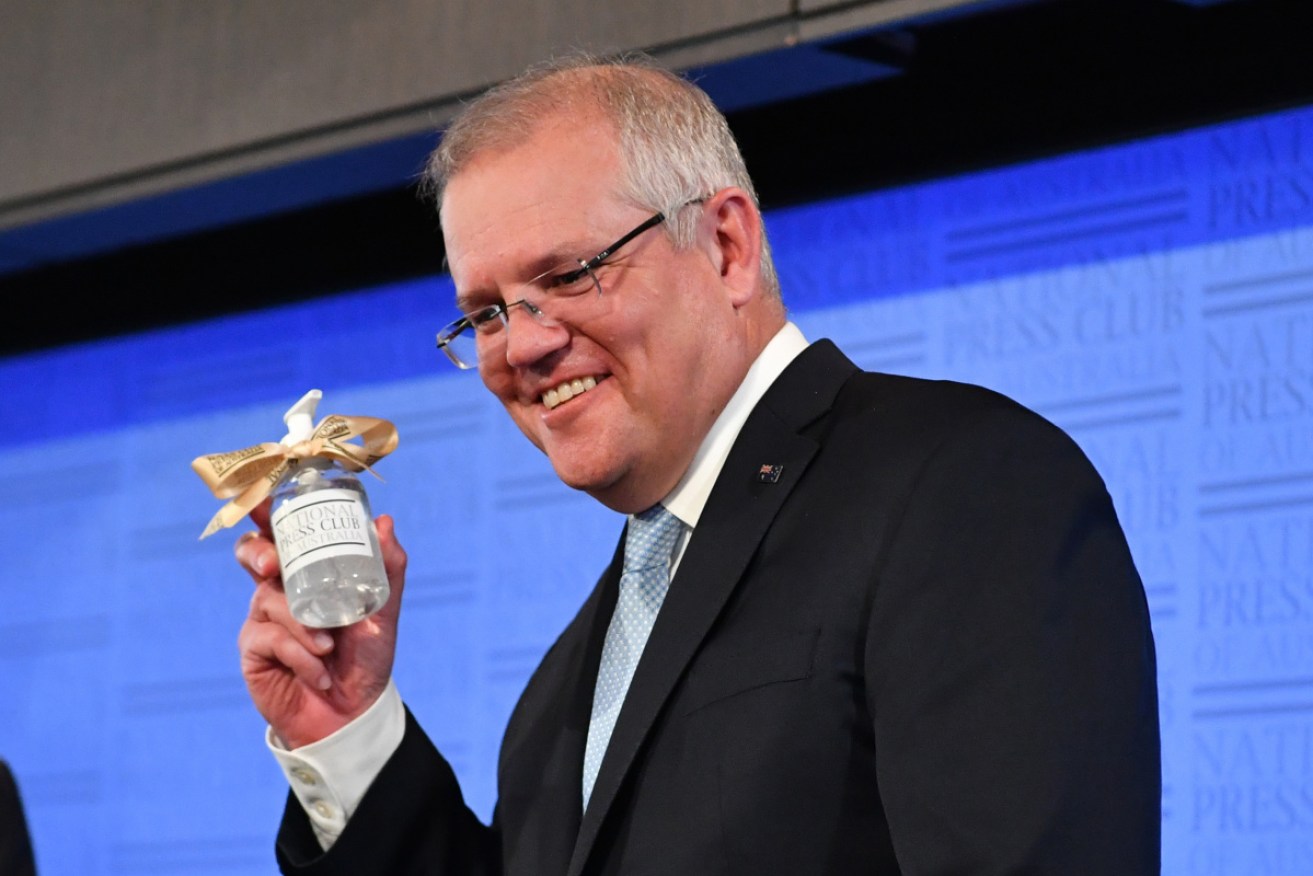
Sanitiser: Scott Morrison is selling hope. Photo: AAP
Like the proverbial stimulus cheque in a faltering economy, snake oil was an incredibly effective medicinal product when it first appeared in America in the mid-1880s – the trouble only started when the salesmen got hold of it.
Brought to the USA by Chinese workers, the oil of the Asian water snake was rich in omega-three acids and did reduce inflammation on all the tired – clearly non-unionised – bones that built the railways.
The product had a good word-of-mouth reputation, but once showmen put local rattlesnakes with no medicinal properties into the mix, followed by snake oil being removed from the product altogether, what labourers were left with was a fancy bottle of congealed fats and no relief.
Over to you ‘Scotty from Marketing’.
From day one as Prime Minister, Scott Morrison was keen to brand himself with the nickname ‘ScoMo’ and many Australians fell for the warm, daggy dad trademark that helped him win a tight election.
Satirical news site Betoota Advocate had different ideas and tagged Mr Morrison with the ‘Scotty from Marketing’ moniker. It stuck.
It is a nickname that seems to offer more insight into the business of politics, with the PM shaking off his bushfire PR missteps and offering up JobKeeper, JobSeeker and now the fancily branded construction industry package HomeBuilder.

Prime Minister Scott Morrison liked sports a lot before the last election. Photo: AAP
But what’s in the bottle?
The jury is out on whether the tradie-friendly home renovator package is the best way to stimulate construction or merely another ideologically-driven vote grabber.
Marketing experts say it’s no surprise politicians use catchy names, themed events and even the likes of Scott Cam to cut through.
Senior lecturer in marketing at Monash University Angela Cruz acknowledges Mr Morrison’s ability to tell a good story, but says there’s a sting in the tail – beware selling a product that doesn’t live up to the hype.
“The Prime Minister’s flair for policy names certainly taps into the power of branding: Strong brands should tell a clear story that resonates with audiences,” Dr Cruz said.
“But let’s remember that marketing isn’t only about coming up with catchy brand names or telling good stories.
Marketing is more importantly about keeping promises and delivering value to your customers – or in this case, your constituents – over the long term.’’
Professor of marketing at the University of Melbourne Simon Bell agrees humans are “inherently inert in their behaviour” and clever communication is often needed to to get them to take notice.
“Polished communication can encourage trial, which can potentially ignite new patterns of behaviour. But it’s not the whole story. The old saying that you ‘can’t make a silk purse out of a sow’s ear’ applies in the world of business and marketing.
“No matter how clever your messaging, if the core product or offer is bad, customers will very quickly revert back to old patterns of behaviour.”
Professor Bell cites the example of the 1980s Decore advertising campaign with people singing the brand name in the shower.
“Trial of the brand went through the roof immediately following the campaign but when customers realised the product’s formulation was poor, they went back to their old brands.
“So, yes, there needs to be substance behind the campaign promises that the government makes.
“Customers are not silly. It’s a terrible stereotype that many people hold that essentially humans are ‘dupes’ who can be led by the nose by opportunistic marketers.
“As the Decore example illustrates, advertising can help grab attention, but it can’t make you buy against your will or despite your best interests.
So I don’t think customers need too much help smelling a rat. They’re pretty good at doing it themselves.’’
One of the world’s most famous marketers, of himself and his products, was PT Barnum, who always put himself at the centre of his promotions.
He famously thrived on controversy, was big on cross-selling and not accepting rejection.
There’s no evidence of Mr Barnum turning back boats or insisting on uninterested customers shaking his hand, but before rehabilitating himself as an abolitionist and spruiker for Abraham Lincoln, Barnum had a problematic career that involved racially dubious freak shows.

P T Barnum was the original ringmaster. Photo: AP Photo: AP/Bill Sikes
Still, even in marketing that new version of himself PT Barnum stuck to his formula, maintaining that making people feel good was a key part of success in business and life.
The experts agree.
“People want to feel good about themselves, their lives, their work, their relationships,” Professor Bell said.
“I think that’s pretty much uncontested.
“People seek out great experiences. But these need to be authentic and real. Again, smoke and mirrors can only take you so far.”
So, although a ringmaster can succeed by dragging customers into a circus or turning from an oppressor to a saviour, how far can a Prime Minister go if branded as a marketer?
And are marketers in business being unfairly branded with the PM’s brush?
“Marketing has always suffered from this perception – the ‘used car salesman’ cliche, if you like. But I don’t think it’s fair if you consider what marketing is really about at its core,” Professor Bell said.
“Unlike any other function within the organisations, marketers care deeply about the customer and how they experience the organisation’s offer … so that’s the defensive answer.
“In reality, I don’t take marketing’s relatively poor reputation to heart and I quite like how it’s been used to bring the PM down a notch or two … a bit like we’ve seen with Trump and #BunkerBoy of recent days.
“Our leaders can always do with a reality check every now and then.”
It’s a good point, and a reminder that it’s worth checking that the snake oil in the bottle is the real deal and not just congealed fats.