Emily Ratajkowski shares baby joy, advocates for gender-neutral parenting
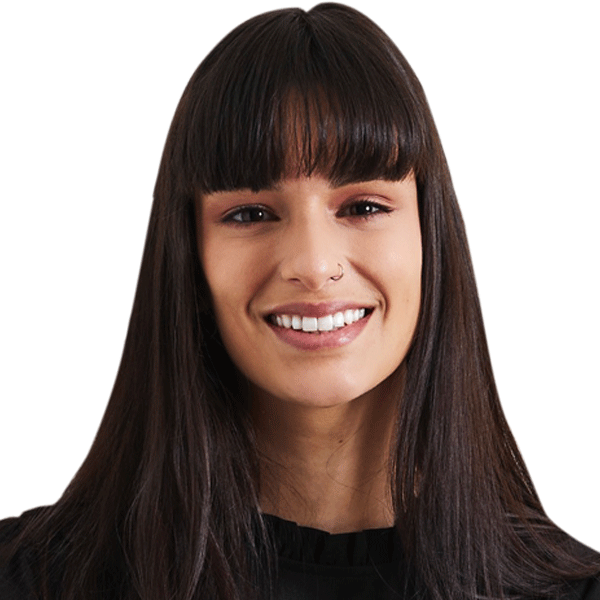
Emily Ratajkowski has revealed she is expecting a child, but has serious concerns over imposing normative gender ideals onto it.
Announcing her baby joy in an essay penned for Vogue, Ratajkowski said she and husband Sebastian Bear-McClard were less concerned with the child’s sex and more concerned about what kind of person it would be.
“When my husband and I tell friends that I’m pregnant, their first question after, ‘Congratulations’ is almost always, ‘Do you know what you want?’ We like to respond that we won’t know the gender until our child is 18 and that they’ll let us know then,” Ratajkowski wrote.
“There is a truth to our line, though, one that hints at possibilities that are much more complex than whatever genitalia our child might be born with: The truth that we ultimately have no idea who – rather than what – is growing inside my belly.
“Who will this person be? What kind of person will we become parents to? How will they change our lives and who we are? This is a wondrous and terrifying concept, one that renders us both helpless and humbled.
“I like the idea of forcing as few gender stereotypes on my child as possible. But no matter how progressive I may hope to be, I understand the desire to know the gender of our fetus; it feels like the first real opportunity to glimpse who they might be.”
It’s not just a boy/girl thing …
The 29-year-old went on to say that she had apprehensions about the gendered pressures her child would face in the world, based on her struggles as a woman.
“I still fight subconscious and internalised misogyny on a regular basis, catching myself as I measure the width of my hips against another woman’s. Who is to say I’d be able to protect my daughter from it?” she wrote.
“I’m scared of having a son too, although not in the same way. I’ve known far too many white men who move through the world unaware of their privilege, and I’ve been traumatised by many of my experiences with them. And boys too; it’s shocking to realise how early young boys gain a sense of entitlement – to girls’ bodies and to the world in general.
I’m not scared of raising a ‘bad guy’, as many of the men I’ve known who abuse their power do so unintentionally. But I’m terrified of inadvertently cultivating the carelessness and the lack of awareness that are so convenient for men.
Ratajkowski and her husband are no stranger to unconventional lifestyles, opting to elope in 2018 after dating for just two months.
The actor and model even ditched the big, white frock in favour of an elegant (and inexpensive) orange Zara suit and wide-brimmed black hat.
From brand to Brangelina ..
Ratajkowski and Bear-McClard aren’t the only Hollywood parents looking to raise their children without gendered expectations.
Angelina Jolie and Brad Pitt are modern leaders in this field, and approached their child’s non-conforming gender identity with grace and understanding.
From the age of three, Brangelina’s first biological child ditched his birth name, insisting on being called John and chopping his long, golden locks.
“She wants to be a boy,” Jolie told Vanity Fair in 2010.
“So we had to cut her hair. She likes to wear boys’ everything.”

Born in 2006, John is the fourth of the six children in the Brangelina brood. Photo: Getty
John, now 14 years old, is on hormone replacement therapy as part of his transition.
“You don’t know who your children are until they show you who they are,” Jolie later told BBC Radio 4’s Women’s Hour.
Following suit is Russell Brand, who said he wanted to avoid imposing any gender norms on his daughter, Mabel, until she was old enough to decide for herself.

Brand has two daughters with wife Laura. Photo: Getty
“I may not even impose a gender upon it, let the child grow up and be whatever the hell it is,” Brand told The Jonathon Ross Show ahead of his daughter’s birth in 2016.
Later, Brand doubled down on his and wife Laura’s genderless parenting approach on This Morning.
“I have re-evaluated the way that I unconsciously looked at gender, because now I’ve got a daughter I think, ‘Wow, I don’t necessarily need to dress her in clothes that are indicative of her gender’,” he said.
“Why would you? I’ve become quite sensitive to that and aware of it.”