Health care workers and hospitals struggle to cope as COVID outbreak worsens

There are growing fears that hospitals will be overwhelmed despite government assurances, as the healthcare system struggles to cope with an influx of COVID-19 patients and a short supply of workers.
New South Wales Premier Gladys Berejiklian avoided specifics about the pressure some hospitals were under in a press conference on Thursday, saying they had more than enough capacity to cope.
However, front-line health care workers and representatives say hospitals in NSW and Victoria are currently under much greater stress than governments have admitted.
It follows reports that 80 per cent of intensive care unit (ICU) beds in NSW hospitals are now occupied.
On Thursday, the state reported a daily record day of COVID-19 cases, and Sydney’s Westmead hospital opened under “emergency operations”, reducing ambulance arrivals for COVID-19 patients and shifting critical patients to other hospitals.
NSW Nurses and Midwives Association assistant general secretary Shaye Candish told The New Daily nurses across the state were feeling the pressure 18 months ago, before COVID-19 hit.
She said staff, especially those working in ICU, were down to their “last little bit of goodwill” to work through the pandemic.
“If we look at the trend, what I can say is that our members were suffering before the pandemic hit. Our members were already at breaking point frankly,” Ms Candish said.

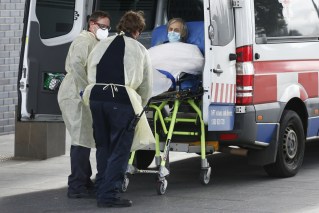
Sydney’s Westmead hospital has instituted ‘emergency operations’. Photo: AAP
“Our members, particularly from ICU, report a real challenge, particularly coming out of those 12 LGAs of concern.
“They’re working overtime. A number of them are reporting working double shifts or short-staffed because they can’t get staff to fill the vacancies.”
Ms Candish said nurses were struggling to cope.
“I would suggest that what’s going on now is the last little bit of our members’ goodwill being maximised,” she said.
“We are already seeing some members that can’t cope. We’re seeing members exposed in their workplace despite the fact that they’re doing everything they can.”
Thousands of nurses a day have been furloughed after being exposed to the virus, Ms Candish said, making operating at normal capacity extremely difficult and stressful for those rostered on.
“It’s a real challenge … we are just pulling on every possible resource we can,” she said.
Regional facilities that don’t have access to agency or short-term staffing are also suffering, Ms Candish said, as their rostering system relies on a handful of staff.

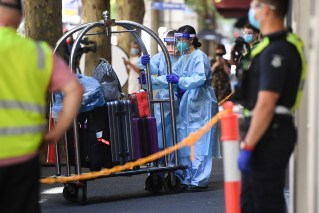
Resources are being stretched and health workers are struggling to cope. Photo: AAP
Melbourne emergency physician Stephen Parnis said the Victorian healthcare system was also struggling, as hundreds of COVID-19-related furloughs hit healthcare workers.
Dr Parnis, who has 30 years of experience and works across three Victorian hospitals, said the system was being stretched.
“We are trying to respond and react by having much more stringent use of PPE (Personal Protective Equipment), the N95 masks, the gowns, and gloves every time we are in a patient-facing area,” he said.
“But you can’t do that 24/7 for 18 months. You don’t have the equipment, and the impact on an individual health worker and on patient care is quite amazing, actually. It’s exhausting.
“It has accentuated the pressure on those of us who are there. Those who are on furlough feel awful about being unable to physically crew the ship.”
Dr Parnis said the increased number of ICU patients, not only in NSW but in Victoria, was alarming and that surge capacity in any public hospital is limited at the best of times.
The impact on staff in hospitals has “no doubt” had adverse effects on how patients, whether COVID-19 related or not, were treated, he said.
Both Dr Parnis and Ms Candish said vaccination was the “bright light” and the key to releasing the pressure on Australia’s front-line workers.