Senators call for more detail on emissions safeguard climate policy
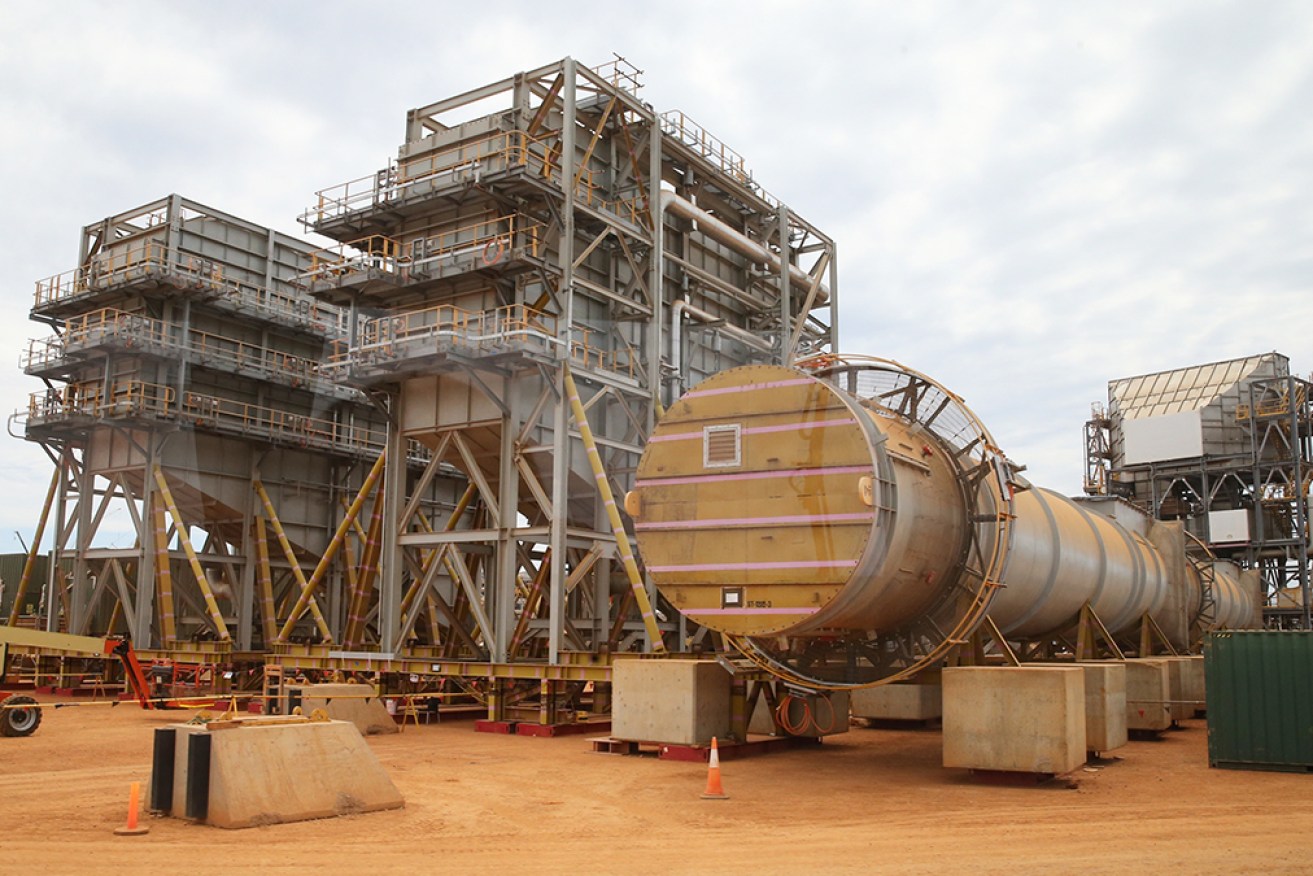
A Woodside executive said the new rules in the climate reforms would not prevent any new projects. Photo: AAP
A carbon price and investment certainty are built into a proposed emissions safeguard but members of a committee scrutinising the changes remain unconvinced.
Federal Labor needs the support of the Greens and several crossbenchers to pass its signature climate policy, after the Liberals and Nationals vowed to block it.
“Tell your minister if he wants his legislation and regulations to pass the Senate, he’s going to have to cough up some more information,” Greens senator Sarah Hanson-Young told federal officials on Tuesday.
Under the rejigged mechanism, emissions from Australia’s biggest 215 industrial facilities must reduce by 4.9 per cent overall every year through to 2030, contributing to the national emissions reduction target of 43 per cent.
Taxpayer-funded safeguard credits would be issued to companies as a reward for achieving deeper cuts than required.
Woodside Energy’s executive vice-president of strategy and climate Tony Cudmore said the proposed package is “ambitious but achievable” with offsets an integral and legitimate part.
The new rules wouldn’t prevent any new projects, he said, referring to the $16 billion Scarborough gas development that critics have described as a “massive climate bomb”.
Independent senator David Pocock, whose vote may be crucial, said it was a “real concern” official modelling wasn’t available on how much taxpayers would pay for the decarbonisation of industry.
A so-called cost containment component caps the price of carbon at $75 a tonne, rising to $100 by 2030, with taxpayers potentially on the hook to cover additional costs.
Edwina Johnson, head of the federal Safeguard Mechanism Taskforce, said that was a “price ceiling” inserted to give investors certainty, but officials didn’t expect it to hit that level.
Officials were also unable to say how much abatement would be achieved on site through cleaner production methods and how much would be covered by offsets.
The Business Council said Australia runs the risk of another 10 years of delay and inaction, and rival countries winning the race on cleaner exports, if the mechanism is not legislated.
The council’s president Tim Reed told the inquiry the plan pushes Australia closer to a credible and practical pathway to net zero than it has been for a decade.
But critics say unlimited carbon offsets, some of them “junk”, will soak up investment dollars at the expense of new energy sources and genuine emissions reductions.
Carbon credits are not a “free ride” and are being used where technology gaps exist in hard-to-abate heavy industries, Mr Reed countered.
Mining operations account for almost half of the facilities covered by the existing safeguard mechanism, which will be repurposed for deeper cuts to emissions.
Minerals Council of Australia chief executive Tania Constable said billions of dollars were already being invested in the electrification of mine sites.
But she warned mine sites would close without access to carbon credits to manage emissions until new technologies were commercially viable and available.
Every technology and energy source, including carbon capture and storage and nuclear energy, would need to be considered to get to net zero emissions by 2050, she added.
“Any country that is currently leading the commitments has nuclear energy in their arsenal,” she said.
Union boss Daniel Walton backed the draft legislation and said workers don’t want to lose Australian jobs to rivals overseas.
He said an immediate priority should be a carbon border adjustment mechanism to keep up with policy moves in Europe and elsewhere, and avoid dirty imports.
-AAP