Liberals commit to further meetings on Indigenous Voice to Parliament
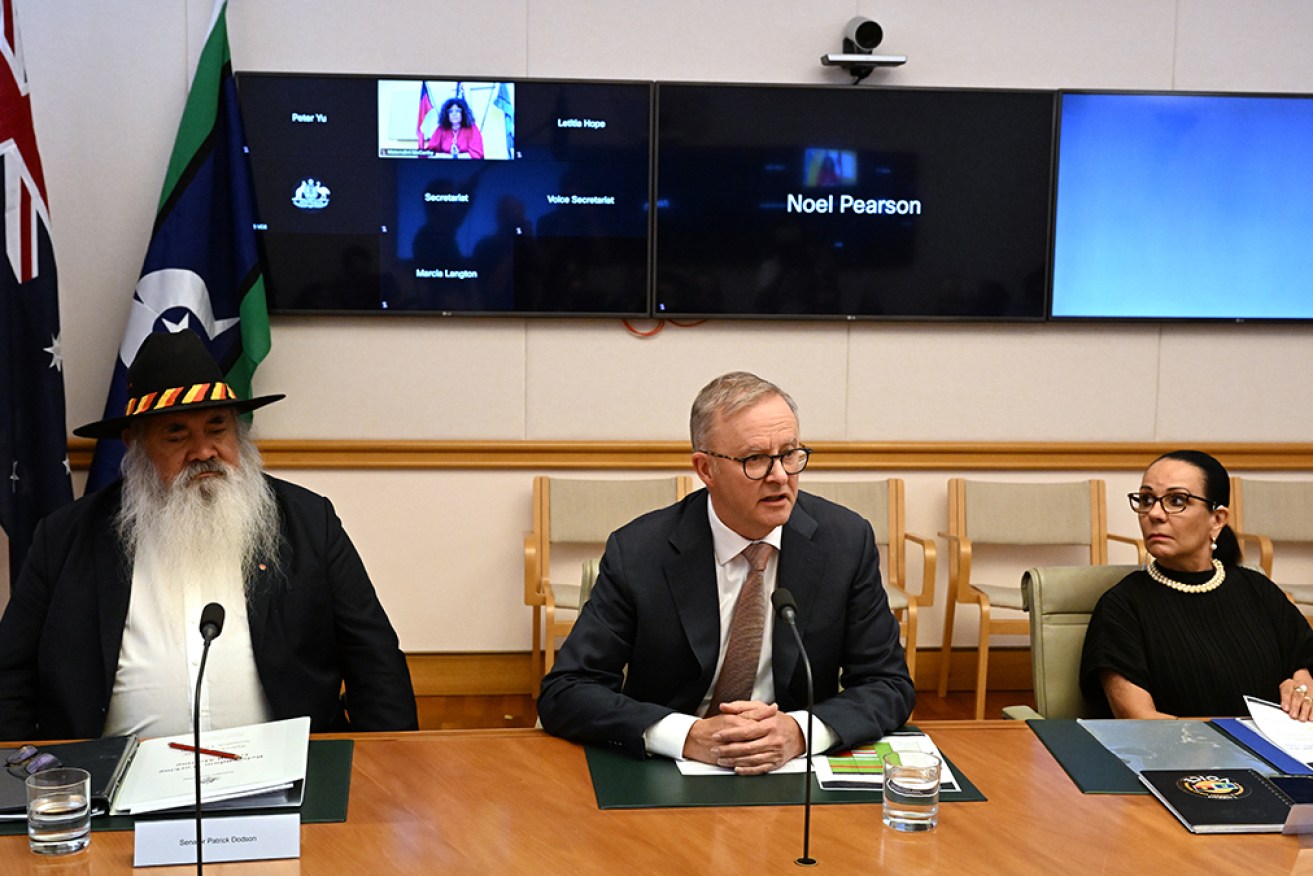
Pat Dodson, Anthony Albanese and Linda Burney met as part of the referendum working group on Thursday. Photo: AAP
Australians will determine the outcome of a referendum on establishing an Indigenous Voice to Parliament, not politicians.
That’s the message from the federal government’s referendum working group after a meeting with Opposition Leader Peter Dutton and shadow attorney-general Julian Leeser about the voice proposal.
The Liberal Party have not yet decided their position on the voice but the group hoped Thursday’s meeting would secure their support.
Working group member Megan Davis said she welcomed Mr Dutton’s commitment to further engage with the group.
Although she would welcome bipartisanship on the matter, Professor Davis said Australians would make the ultimate decision.
Tweet from @LindaBurneyMP
“The Australian people will determine the outcome of this referendum, not politicians,” she told reporters in Canberra.
“The Uluru Statement From The Heart was an invitation to the Australian people and an invitation to walk with First Nations people in a movement for a better future.
“The constitution is the people’s document. Politicians can’t change it. Parliament can’t change it. Only you, the Australian people, can change it.”
Professor Davis said the group would provide its final recommendations on the referendum to the federal government at the end of February, with a bill to alter the constitution to be introduced to Parliament in March.
In a statement after the meeting, Mr Dutton said he came to the debate with “goodwill and respect” but wanted Australians to be informed.
Mr Leeser told reporters he did not learn anything from the meeting he did not already know but he and Mr Dutton would meet with the working group again.
“It was a very comprehensive presentation about the history of the Uluru dialogues which led to the Voice,” he said.
“It was information that I was familiar with having been involved in earlier stages of this process.
“I think it’s been a good process today to meet with the working group. We accepted the government’s invitation to meet with them and we’d now like the government to accept our invitation to deal with the questions (we have) raised.”
Mr Leeser said the opposition was seeking more details about how the Voice would operate if the referendum was successful.
Prime Minister Anthony Albanese remained optimistic about the referendum’s success despite the launch of a “no” campaign.
“As we get down to the campaign there are two clear messages of what it’s about: Recognition and consultation, simple as that,” Mr Albanese said.
“My government is very committed to this. We will continue to put everything into this campaign and I know that increasingly this will be an opportunity to bring the nation together.”
Mr Albanese said his “door was always open” to discuss the Voice proposal.
The PM said the model and shape of the Voice would be decided by Parliament after the referendum, which will focus on enshrining the body in the Constitution.
Indigenous Australians Minister Linda Burney flagged the Voice might not come into place in this term of Parliament and said there was no timeline for legislating the body if the referendum succeeds.
Ms Burney said while the “yes” campaign had more work to do ahead of the vote, it would be preferable for the Liberals to support the push.
The Greens are also split on support for the referendum after outspoken Senator Lidia Thorpe said she would not support the Voice without a guarantee the constitutional change would not cede Indigenous sovereignty.
Greens leader Adam Bandt said his party wanted to progress all elements of the Uluru Statement from the Heart, which includes treaty and truth-telling processes.
Bipartisan support has historically been needed for referendums to succeed.
-AAP