Emmanuel Macron and populist challenger Marine Le Pen will both qualify for a presidential run-off, setting up a rematch of the 2017 French election.
Initial projections of the first round show Mr Macron ahead of Ms Le Pen with a four to five-point margin after the close of voting.
Mr Macron won 28.1-29.5 per cent of votes while Ms Le Pen won 23.3-24.4 per cent of voter support, separate estimates by pollsters Ifop, OpinionWay, Elabe and Ipsos showed.
That outcome would set up a duel between an economic liberal with a globalist outlook in Mr Macron and a deeply eurosceptic economic nationalist who, until the Ukraine war, was an open admirer of Russian President Vladimir Putin.
Not for two decades has a French president won a second term.
Barely a month ago, Mr Macron appeared near certain to reverse that trend, riding high in polls thanks to strong economic growth, a fragmented opposition and his statesman role in trying to avert war on Europe’s eastern flank.
But he has paid the price for late entry into the campaign during which he eschewed market walkabouts in provincial France in favour of a single big rally outside Paris.
A plan to make people work longer has also proved unpopular.
By contrast, Ms Le Pen has for months toured towns and villages across France, focusing on cost-of-living issues that trouble millions and tapping into deep-seated anger towards the distant political elite.
A more than 10 point lead Mr Macron had enjoyed as late as mid-March evaporated and voter surveys ahead of the first round showed his margin of victory in an eventual run-off whittled down to within the margin of error.
“I’m scared of the political extremes,” said pensioner Therese Eychenne, 89, after voting for Macron in Paris.
“I don’t know what would become of France.”
Investors took note of Ms Le Pen’s surge.

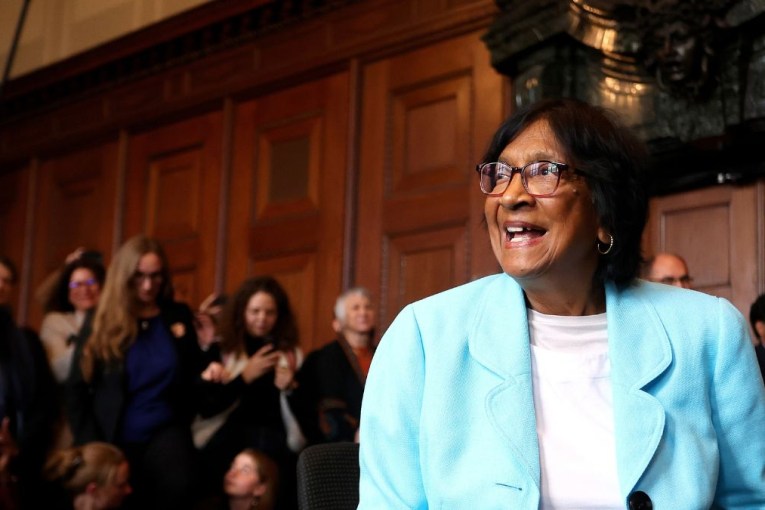
Marine Le Pen, French far-right party Rassemblement National (RN) presidential candidate, after the results of the first round. Photo: Getty
The yield on French 5- and 10-year government bonds hit multi-year highs last week.
A Le Pen victory on April 24 would constitute a similar jolt to the establishment as the United Kingdom’s Brexit vote to leave the European Union or Donald Trump’s 2017 entry into the White House.
France, the EU’s second largest economy, would lurch from being a driving force for European integration and centralisation to being led by a euro-sceptic who is also suspicious of the NATO military alliance.
While Ms Le Pen has ditched past ambitions for a “Frexit” or to haul France out of the euro zone’s single currency, she envisages the EU as a mere alliance of sovereign states.
Who next holds the Elysee Palace will depend on how those who backed Mr Macron and Ms Le Pen’s rivals cast their ballots.
Surveys suggest that the so-called “republicain front” opposed to Ms Le Pen has crumbled, with many left-wing voters saying they are loathe to endorse a leader they deride as arrogant and a “president of the rich.”
“We want change, so why not give her a chance (in round two)?” technician Alex Talcone said in the Paris suburb of Bobigny after voting for hard-left candidate Jean-Luc Melenchon.
-with AAP