Almost a third of Australians struggling to pay their bills

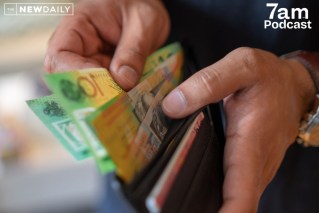
Up to 7.5 million Australians are struggling to pay their bills as living costs outstrip wages growth.
The Financial Consciousness Report compiled by accounting giant Deloitte and consumer comparison site Compare The Market found fewer Australians feel financially secure now than in 2018.
Based on a survey of 3000 people, the report found up to 7.5 million Australians – just under a third of the population – are struggling to regularly pay their bills.
The problem stems from rapidly increasing living costs that have outstripped sluggish wages growth, Compare the Market general manager of banking Rod Attrill told The New Daily.
Energy prices are a particular concern, Mr Attrill added.
“In the past, when energy and insurance and those kinds of things may have been slightly cheaper than they are at the moment, people had enough money budgeted to pay for them. But now we’re seeing people with only partially enough when the bill arrives,” he said.
“People are budgeting as much as they can, but some of those bills are coming in and they are really struggling to pay them on time.”
The federal government last year called on the national energy regulator to investigate claims providers have been gouging customers after an Australian Taxation Office analysis suggested Australians are being overcharged to the tune of $400 million per year.
New laws designed to curb gouging and to reduce prices were introduced on July 1, 2019, however these differ from state to state.
‘Overwhelmed’ Australians unsure how to act
Worryingly, the report also found the number of Australians who understand how to improve their situation dropped 9 per cent, with 34 per cent of people worried about their finances, but unsure what to do about their fears.
Only 28 per cent of people are confident in their finances and aware of the reasons for their confidence.
“There’s been a lot of chat about finance and Australians’ individual financial situations, but it can be overwhelming and there is a real ‘deer in the headlights’ issue,” Mr Attrill said.
The report also reinforces new data from ANZ and market researcher Roy Morgan, which found Australians are worried about the economy despite consumer confidence lifting over the past week.
“We’ve had very strong jobs growth, wages have gone up a bit, and we’ve also had tax cuts and interest rates have collapsed. That makes people feel a lot better about their own financial circumstances,” ANZ head of Australian economics David Plank told The New Daily.
“Then when they look out the window, they see a world which looks to be terribly uncertain, with all sorts of confusing tweets flying around and trade wars and volatility in equity markets.
“They’re in pretty good shape themselves, but pretty nervous about what they see.”
Confidence linked to employment
The average Australian’s perception of the global economy tends to be quite volatile, Mr Plank said, swinging from good to bad, in line with economic news.
The current divide between consumer confidence (which actually improved in the week ending August 23) and economic sentiment is surprising, but is likely to close if job creation continues to climb.
“Both economic conditions and personal finances matter, and the signals we’re getting are conflicting. But as long as the labour market does OK, in time we’ll get a convergence,” he said.
The reasoning behind that theory is that local economic conditions are “pretty positive”, and if that remains the case going forward, consumers’ fears will start to fade.

Capacity woes as data centres top mining boom

Rate rises and a recession we don't have to have

The surge in financial abuse against women