Lord Howe Island closed over ecological threat


Almost three-quarters of Lord Howe island has been declared off-limits to travellers. Photo: Getty
One of Australia’s most exclusive holiday destinations has been closed to tourists due to the threat of an airborne fungus.
About 70 per cent of the world heritage-listed Lord Howe Island has been abruptly declared off limits due to an outbreak of myrtle rust.
The closure, announced by the Lord Howe Island Board on Wednesday, is likely to last until the outbreak is controlled. The board said it was designed to help limit the spread of highly transferable fungus spores on the island, which is in the Tasman Sea about 700 kilometres north-east of Sydney.
Board chairman Atticus Fleming said it was a scientific decision.
“Lord Howe Island is incredibly special. It’s world heritage-listed. It has a whole lot of threatened species that are found nowhere else in the world, so we just can’t take any risks,” he said.
“Not only because those conservation values would be put in jeopardy, but because the tourism is obviously really a big part of the island economy, and if we have big impacts on the environment then there’ll be big impacts on the tourism industry.”
Myrtle rust is an exotic fungus that has been on mainland Australia since 2010.
It was spotted on Lord Howe Island for the first time on February 3. Mr Fleming said it had since been found in four locations, all in areas where people live.
That triggered this week’s emergency response.
“Part of the plan is to limit movement of people into the permanent park reserve, which is, if you like, the national park component of the island. It’s not the only way that this fungal spore can be spread but it’s certainly something that we can control,” he said.
“I’m hopeful that we’ll be able to contain it to the settlement area and then eradicate it before it gets into the park preserve. But a lot will have to go right for that to happen.”
Lord Howe is home to more than 100 species that are not found anywhere else. Invasive Species Council chief executive Andrew Cox said those rare plants were “highly susceptible” to the fungus.
“If we lose a species from there, that’s it. It’s the only place in the world they’re on, so it’s really important we get on top of this,” he said.
Considered a hidden paradise, Lord Howe has a dozen white sand beaches, volcanic peaks, and coral reefs. It is home to just 400 permanent residents.
Lord Howe cafe operator and treasurer of the local tourism association, Stephen Sia said the abrupt shutdown was a surprise.
“There are about three or four groups already on the island in the middle of all the walks, and the shutdown means they can’t do their walks and all their schedules are disrupted,” Mr Sia told the ABC.
He said it was a popular time for walking groups and birdwatchers.
“It’s a busy time of the year leading up to Easter and there have been requests for refunds and all sorts of compensation,” Mr Sia said.
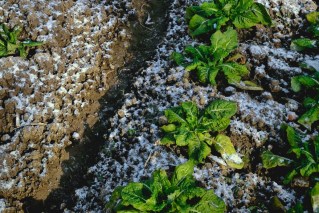
Invasive myrtle rust, identified by its bright yellow spots, is considered endemic in Australia and unable to be eradicated.
In the 12 years since arriving here, it has infiltrated every state including Tasmania, as well as the Tiwi Islands in the Northern Territory. It flourishes in bushland reserves, backyards, commercial operations, nature strips and parklands.
The Invasive Species Council says myrtle rust could eventually universally “alter the composition and function of forest, woodland, heath and wetland ecosystems”.
It said the Lord Howe incursion was “about as bad as it can get for biosecurity in Australia”.
-with AAP
‘Super pest’ detected in Sydney warehouse
Magnitude 4.8 quake shakes Victoria