Killing cane toads with kindness and some very neat science
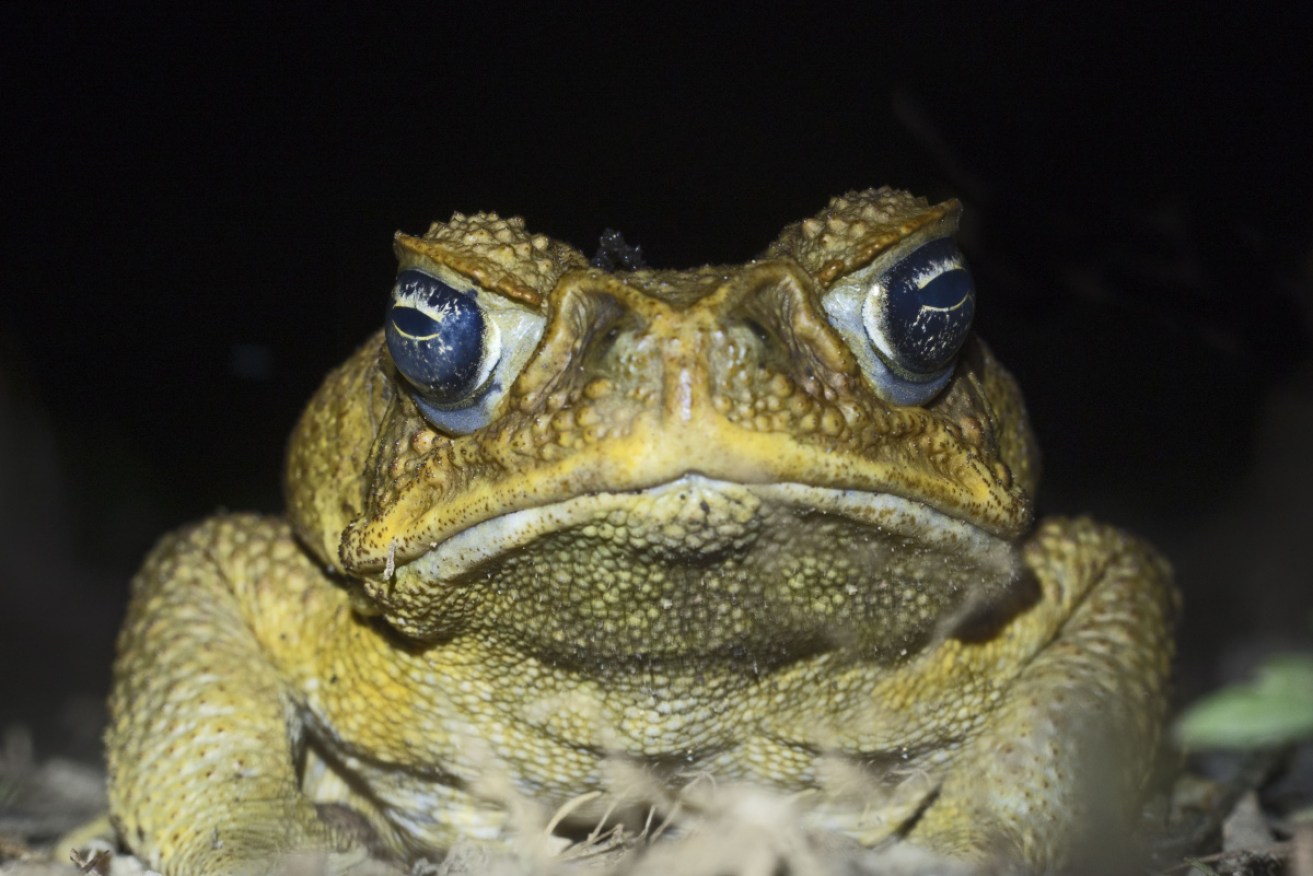
There's not much to like about cane toads, a plague across northern Australia. Photo: Getty
Since Australia’s cane toad invasion began almost 90 years ago hunting the warty amphibians has become something of a national cause, and not always a noble one.
The list of brutal ways to kill the imported pest is long, creative, often grisly and doesn’t bear repeating.
But there is a humane way to terminate the deadly invader, put their carcasses to good use, and avoid the dreaded “zombie toad phenomenon”.
Emily Vincent, from the environmental charity Watergum, is an expert toad hunter and is teaching others how to do it ahead of this year’s Great Cane Toad Bust.
Last year’s hunt saw more than 55,000 toads captured in a single week.
It may not seem like much in the scheme of things but the environmental rewards are vast given every adult female can lay up to 70,000 eggs a year.

These cheeky cane toads were snapped hitching a riding atop a python smart enough to know swallowing one would mean death. Photo: Supplied Photo: Paul Mock
If just a quarter of the toads caught were female, close to one billion tadpoles would be prevented from entering the environment and doing untold harm to native species.
Humane cane toad busting is a low-tech pursuit that requires little more than a bucket and a pair of gloves, or a rubbish pick-up stick for those who want to avoid having to bend over to grab the critters, Ms Vincent told AAP.
Dusk is prime hunting time as the toads venture out into easy-access areas – grassy backyards, paths, parks, ovals – in search of food. They love well-lit spaces because the light attracts moths, which they like to eat.
Into the fridge with you, Mr Toad
Then it’s a simple case of grabbing the toads, popping them into the bucket, cooling them in the fridge, and finally euthanising them in the freezer.
It’s vital not to skip the fridge step because directly freezing toads causes them pain, Ms Vincent warns.
Popping them in the fridge first cools them down and puts them into torpor, a state that’s a bit like hibernation and involves a slowing of bodily functions.
Australian researchers who implanted data loggers in the brains of cane toads a few years ago discovered that those cooled in the fridge for a few hours didn’t register any evidence of pain when they were later put in the freezer.
The fridge-then-freezer approach also appears to ward off the likelihood of the so-called zombie toad encounter.
“We’ve had occasions where we’ve had frozen toads dropped off to us, by members of the public, and then they’ve been in our freezer for a week, but when we’ve gotten them out and started defrosting them they’ve woken up,” she says.
“We do know amphibians can do this, they can freeze themselves and wake up. We’ve contacted the uni to ask about it.
“When this happens, they suggested, they might just have been frozen really, really, really quickly and not cooled prior to being frozen and that’s meant they’ve preserved themselves.”
As odd as it might seem, Watergum welcomes regular deliveries of frozen toads gathered by Aussie ecowarriors.
Toxic avengers
That’s because the toxin stored in the glands at the back of toad necks is the key to a new weapon of mass destruction targetting cane toad tadpoles.
A couple of years ago, the University of Queensland’s Institute of Molecular Bioscience and the University of Sydney’s Professor Rick Shine worked out how to turn tadpole behaviour and the cane toad’s own toxin against the species.
When tadpoles hatch in rivers, streams, dams or ponds, they’re gripped by an impulse to seek out and eat eggs laid by other females. They do this by following the scent of pheromones present in cane toad toxin.
“Cane toad eggs are covered in pheromones by the female when she lays them. She basically coats them in a secretion that contains the toxin. We think this protects the eggs from predators,” Ms Vincent says.
“And we know that if tadpoles detect this pheromone scent, they’re going to follow it.”
The research carried out by universities means that the pheromones can be isolated from toxin glands harvested from dead toads and used to make tadpole lures.
The task of commercialising the lures has been trusted to Watergum, which expects lures and tadpole traps to go on sale in the first few months of this year.
“In the lab we isolate this pheromone and discard everything else. Then we apply it to a slow-release capsule and this creates our lure,” Ms Vincent says.
“That lure goes into a trap that’s put into the water. The pheromone scent drifts out and creates, like, a trail and any tadpoles present will follow it and end up in the trap.”
No risk to native species
Crucially, the lure does not attract other species so it poses no risk to native frogs and toads.
Ms Vincent says the lures will provide an excellent second line of defence, but collecting adult cane toads before they can breed is the most successful method of control.
“We can now use those adult toads and turn them into lures to catch tadpoles produced by any we miss. It’s a nice big circle of control.”
An announcement about when the lures and traps will go on sale is expected within the next few months.
Toad carcasses that can’t be sent to Watergum for toxin harvesting can be disposed of in kerbside wheelie bins.
The 2023 Great Cane Toad Bust is taking place from January 23 to 29 across the states and territories where they are found.
For details about how to participate in this year’s Great Cane Toad Bust, from January 23-29, visit https://watergum.org/greatcanetoadbust/
-AAP
‘Super pest’ detected in Sydney warehouse
Magnitude 4.8 quake shakes Victoria