Drones, AI to keep watch over native animals
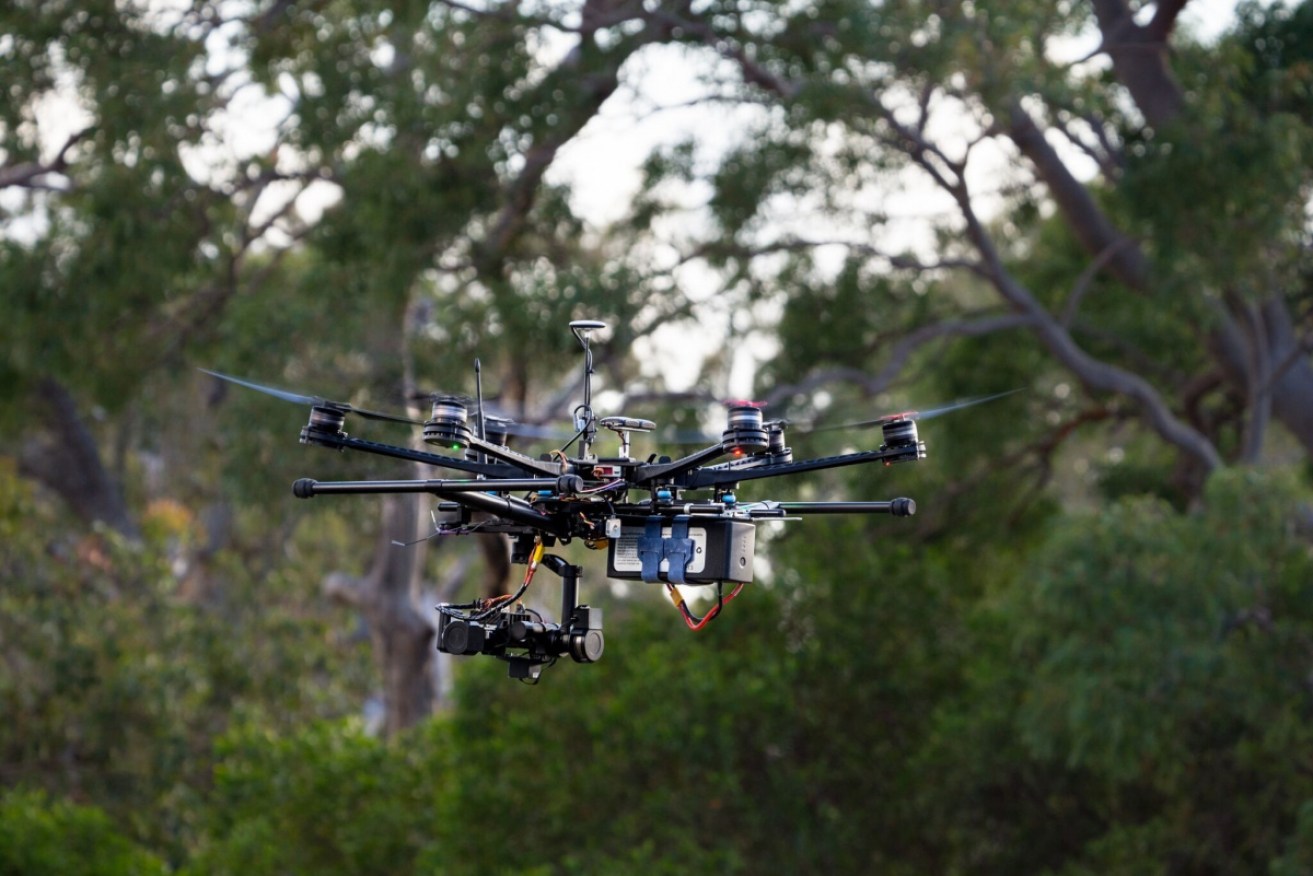
A drone helps monitor koalas in a program run by the Queensland University of Technology. Photo: AAP
Drones, infrared cameras and artificial intelligence are the latest tools to protect endangered native animals in a program described as “citizen science on a much bigger scale”.
With an initial focus on koalas, researchers at Queensland University of Technology are planning to create a wildlife conservation network using the technology to detect native animals around the country.
The black summer bushfires of 2019 and 2020 highlighted how little was known about wildlife populations in Australia, Associate Professor Grant Hamilton said.
“There were estimates of billions of animals killed or displaced, but these figures were by necessity based on modelling rather than monitoring, and this lack of data means priority areas for protection could not be established,” he said.
“This system will allow Landcare groups, conservation groups, organisations working on protecting and monitoring species to survey large areas in their regions, anywhere in Australia, with the use of drones and thermal imaging detection, and send the data back to us where we can process it.”
Advanced technology combined with “boots on the ground” methods had the potential to produce faster and more accurate population assessments, Noosa and District Landcare’s Rachel Lyons said.
“I’m in the process of training myself and several members of Noosa and District Landcare in drone operations and project reporting,” she said.
“This will revolutionise how we function in the future, especially as extreme conditions increase, it’s more important than ever to innovate and evolve.”
Supported with $325,000 from the Landcare Led Bushfire Recovery Grants, the program will develop the capacity of Landcare and other community groups to conduct drone surveys for wildlife detection.
“It can also be used to identify pest species for management in these areas,” Dr Hamilton said.
The $14 million bushfire recovery grants are funded by the Australian Government.
Magnitude 4.8 quake shakes Victoria