Consumers drive the economy by spending savings, but inflation is set to hit hard

A massive number of Australians spending their lockdown savings on holidays and eating out drove above-trend economic growth over the June quarter.
But economists warn the outlook is souring rapidly as inflation and rising interest rates start eating into household budgets.
Australia’s economy grew by 3.6 per cent in annual terms over the three months ended June 2022, official data published on Wednesday revealed.
The robust result, substantially higher than long-term averages, was largely driven by higher household consumption and strong exports.
Australians are rapidly spending more than $250 billion in savings they socked away during COVID-19 on everything from holidays to cafe trips and even new wardrobes to wear out with their friends, data showed.
But with inflation at a 30-year high and mortgage bills rising, economists expect this spending will soon slow substantially.
That means economic growth is also expected to decline rapidly because business spending has shown little sign of picking up the slack.
‘‘Households are driving much of the economic recovery [from COVID] we’ve seen thus far,’’ Indeed APAC economist Callam Pickering said.
‘‘But there are signs we’re seeing the end of it.’’
Household savings fall
Household spending rose 2.2 per cent in the three months to June and was the single largest contributor to real GDP growth in the economy.
It was underpinned by an ongoing recovery in spending on services, which increased 3.6 per cent in an anticipated return to pre-COVID levels.
This offset a 0.1 per cent fall in spending on goods such as groceries.
Spending on transport (up 37.3 per cent) and hotels, restaurants and cafes (up 8.8 per cent) were the biggest factors in services growth.
All this holidaying and eating out wasn’t funded by rising household incomes, but savings accounts.
The household savings rate plunged for the third quarter in a row from 11.1 per cent to 8.7 per cent, which is close to pre-pandemic levels.
That has economists worried because there’s only so much savings that can be spent before many consumers start to tighten their belts.
‘‘Household savings as a source of economic strength is diminishing quarter by quarter,’’ Mr Pickering said.
‘‘We will see economic growth slow considerably.’’
KPMG senior economist Sarah Hunter said spending was set to slow anyway as the post-COVID services splurge runs out of legs, but rising inflation and mortgage bills are now set to make things even worse.
‘‘The headwinds are mounting,’’ Dr Hunter said.
‘‘There’s a limit to how much that [the savings rate] can go down and inflation naturally eats into that.’’
Business outlook cloudy
An expected slowdown in the household sector, which makes up most of the real economy, is a significant headwind for growth, economists said.
One key issue is that the outlook for business investment – which unlike consumer spending never really took off after COVID lockdowns – is also souring.
Mr Pickering said that rising interest rates will make it more expensive for firms to invest in new machinery and equipment, meaning business spending won’t pick up the slack as households tighten their belts.
‘‘There’s not much happening on the business investment side and that’s a bit of a concern, particularly with rates rising,’’ he said.
‘‘That could subtract from economic growth over the next 12 months.’’
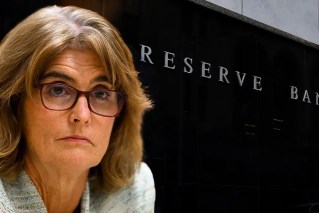
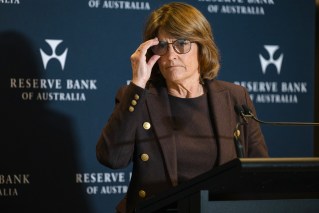
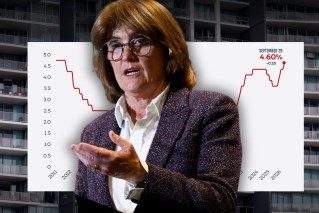
Treasury and the Reserve Bank have already cut their growth outlooks for the economy in recent months to account for this.
The RBA predicts GDP growth will slow to 1.8 per cent in annual terms by the June quarter in 2024 – roughly half of the current rate and slightly below longer-term averages.
One bright spot, however, continues to be Australia’s terms of trade, with exports rocketing upwards as mining companies post record profits amid sky-high commodity prices (partly driven by the war in Ukraine).
However, Dr Hunter warned that unlike Australia’s previous mining boom, when investment was a huge factor driving the economy, the current commodities boom is largely being seen in higher incomes.
This means higher commodity prices won’t provide the same level of stimulus for the broader economy as they did about a decade ago.
‘‘This time around we won’t see that type of support,’’ Dr Hunter said.

Raising the rate of JobSeeker would save lives
Pain for borrowers as RBA lifts rates again