Every step you take, every move you make, retailers are watching you

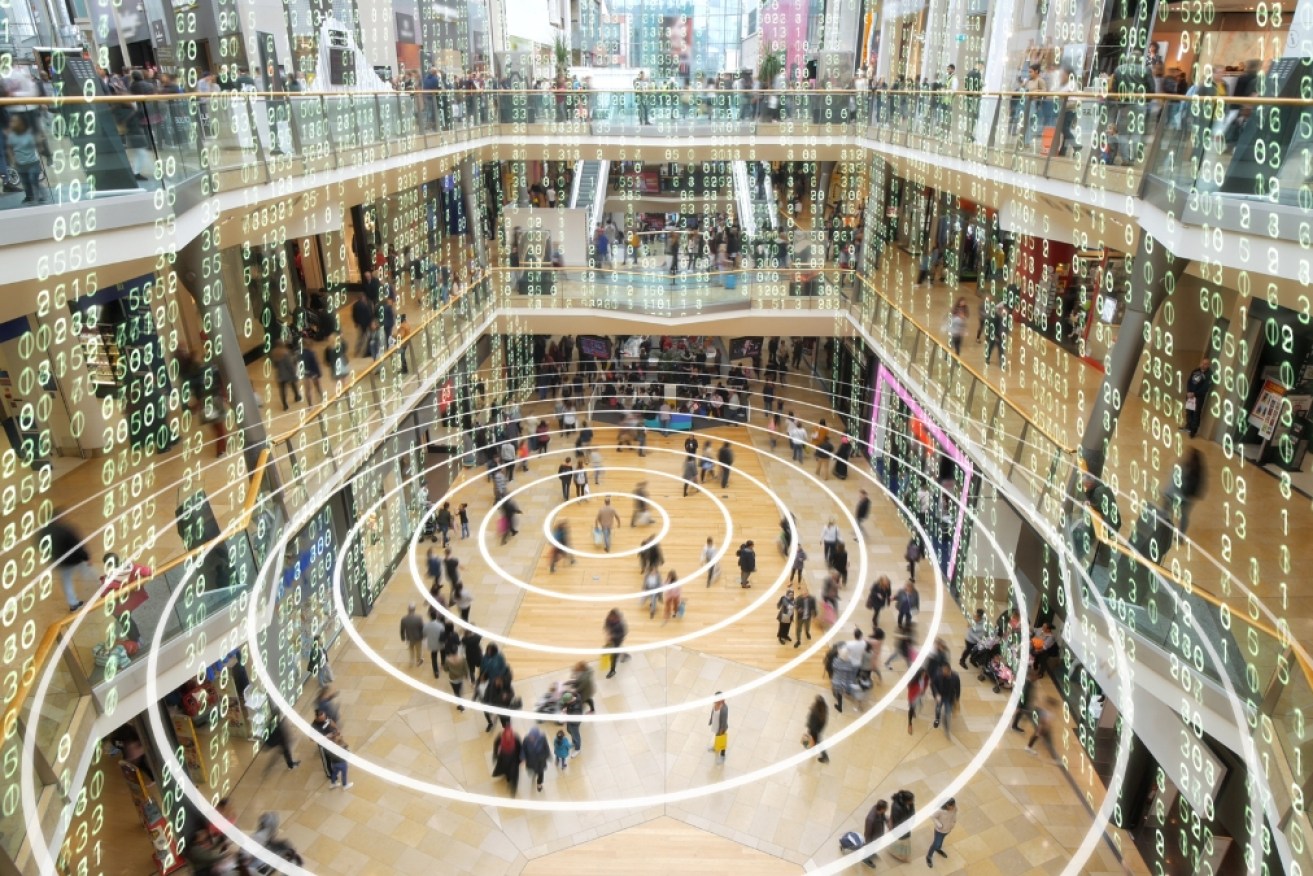
You're likely being tracked from the moment you set foot in a large shopping centre. Photo: Getty
Every step you take around a large store is likely under scrutiny by retailers for insight into your shopping habits, a consumer advocacy group has found.
A number of technologies are being used to monitor customers when they shop in person, from facial analysis software to Bluetooth or wi-fi tracking.
Brian Walker, Retail Doctor Group CEO, said we live in a world where we are constantly tracked, with your activity on everything from your personal social media to a retail store’s website being analysed.
He said for the retail sector, tracking customer movements and interests are done with the goal of attracting loyal customers.
“The technology now enables us to understand, at this stage, customer attraction; where they look into a store, where they walk, what the high points of trade are,” Mr Walker said.
“And that influences everything from range selection and choice to … merchandise layout, profitability on products, loyalty of customers, data itself on customer segmentation models [such as type of customer and visitation time].
“The real key to this is the ability of the retail environment to convert this data into repeat visitation and referral visitation whilst driving the economics of the investment in rent, in stock and in people.”
Mr Walker said retailers are facing pressure from consumers to ensure their rights and privacy are being protected – a notion that all understanding retailers would support.
New tracking technology
Shoppers may be accustomed to seeing their face pop up on self-serve screens, but Choice consumer data advocate Kate Bower said cameras can also be hidden in objects like digital billboards.
Images taken can be fed through an algorithm that can estimate your age, gender and other characteristics before displaying an advertisement deemed more suited to you.
“There are many ways customers may be surveilled in a retail space without their knowledge,” Ms Bower said.
Bluetooth beacons and wi-fi trackers are also becoming more common as a method of monitoring shoppers’ movements around shops and shopping centres.
Beacons are devices that emit Bluetooth signals, which can connect with phones that have their bluetooth functionality switched on, even if the phone’s owner isn’t actively using it.
Wi-fi trackers work much the same way, and can be used by large shopping centres to assess traffic flow and set rents, Curtin University professor of consumer psychology and neuroscience Billy Sung told Choice.
“If you have wi-fi or Bluetooth enabled on your phone, many retailers can use it to track your movements,” Ms Bower said.
“They may even be able to link it to other information, such as transactions you’ve made in store.”
Loyalty programs can also be a “data goldmine” that enable retailers to collect valuable and highly specific data about their customers, which can be used for personalised marketing and pricing.
“Supermarket rewards programs can share data and insights with their insurance businesses, while others could be sharing your personal information with data brokers,” she said.
Major retailers such as the Good Guys have bowed to backlash over facial recognition software, but others like Kmart and Bunnings are sticking to their guns.
Concerns over tracking
Ms Bower said Choice’s major concerns are how the collected data is used, and the lack of regulation surrounding the issue.
“These new retail technologies clearly illustrate the urgent need for privacy law reform to protect people’s personal data,” she said.
“When the Privacy Act was first developed in the 1980s, many of these tracking technologies didn’t even exist, meaning much of the law is completely outdated.”
In February, the Attorney-General released the Privacy Act Review Report, which proposed reforms to the Privacy Act 1988.
The proposed reforms include tougher rules on consent and retaining personal information, as well as individuals being able to opt out of direct marketing and consent being required for an individual’s personal information to be traded.