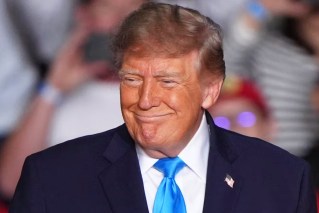
President Donald Trump has seemingly performed a U-turn on his harsh treatment of Australia by cranking up the flattery of our “very nice!” Prime Minister Malcolm Turnbull after his earlier attacks shocked and angered Republicans.
In his typical early morning tweet storm on Friday, Mr Trump praised and thanked Mr Turnbull for “telling the truth” about their “very civil” phone conversation earlier in the week.
Thank you to Prime Minister of Australia for telling the truth about our very civil conversation that FAKE NEWS media lied about. Very nice!
— Donald J. Trump (@realDonaldTrump) February 3, 2017
The “very civil” chat to which Mr Trump referred was the same phone conversation in which the President reportedly berated Mr Turnbull for signing “the worst deal ever” with former president Barack Obama before hanging up a full 30 minutes earlier than expected.
The Washington Post reported – citing US officials briefed on the phone call – that Trump told Turnbull the agreement he struck with the Obama administration was “dumb” and that he (Trump) was “going to get killed” politically if he honoured it.
The leak is widely thought to have originated from inside the Trump administration, which makes Trump’s tweet all the more interesting. Did he order the leak, only to rue the backlash? Or was it leaked without his knowledge, and is he now trying to contain the damage?
Little is known publicly about the secret refugee deal, except that the US reportedly agreed to take 1250 refugees currently held on Nauru and Manus Island, many of whom are from Sri Lanka, Pakistan, Bangladesh, Iran and Iraq.
Mr Trump allegedly accused Mr Turnbull and Australia of seeking to send “the next Boston bombers” to the US by securing the deal.
A change of tone?
The President’s latest Twitter comments blasted the “FAKE NEWS media” for reporting falsely on his conversation with the Australian prime minister.
And yet, on the day before his flattery, Mr Trump seemed to double-down on his criticism of the deal, telling reporters that Australia was one of a number of countries that had “terribly taken advantage of us” — comments that seemed to fit with accounts of his frustration during the call.
“We had a problem where, for whatever reason, President Obama said that they were going to take probably well over a thousand illegal immigrants who were in prisons and they were going to bring them and take them into this country,” he said.
“And I just said why? Why are we doing this? What’s the purpose? So we’ll see what happens.”
Something appears to have changed overnight. It may very well be the torrent of criticism coming from US journalists, commentators and politicians, many of them Republicans.
Mr Turnbull has been very guarded in his comments on the phone conversation, but he has appeared to confirm that the conversation was somewhat less than ‘cordial’.
He told John Laws on 2SM radio on Friday that Trump is “clearly a big personality” and noted that White House spokesman Sean Spicer had “described the conversation as a cordial one”.
Mr Turnbull did not reiterate that it was “cordial”. Instead, he told John Laws it was “very frank” and “forthright”.
“I always make my case as persuasively as I can, I stand up for Australia, I stand up for our interests,” the Prime Minister said.
“It’s obviously a deal he wouldn’t have done, he’s expressed his views about it, but he has committed to doing it.”
What Mr Turnbull did do, though, is deny that Mr Trump hung up the phone on him. This could be the “truth” to which the President referred.
Opposition Leader Bill Shorten has supported the Prime Minister’s handling of the furore, which some fear has threatened the long-standing ANZUS military pact of mutual protection.
“Mr Trump needs to understand and show greater respect to Australia and the Australian alliance than he seems to be displaying, if the reports are right,” Mr Shorten told reporters on Friday.
“This may surprise you but whilst I’m not a fan of the way Mr Turnbull has been handling matters on this one I’ve got some sympathy for him because, quite bluntly, I don’t think you can run an American-Australian alliance by Twitter.”
What’s in the deal?
As The New Daily reported on Friday, pressure is mounting for the confidential details of the refugee deal to be revealed after influential US Republican Senator Chuck Grassley called on the White House to declassify its contents.
“As I said before, the American people have a right to be fully aware of the actions of their government regarding foreign nationals who may be admitted to the United States,” Senator Grassley wrote in a letter to new Secretary of State Rex Tillerson.
“American taxpayers not only foot the bill for the majority of the refugee resettlement in the United States, but they bear any consequences regarding the security implications of those admitted to our country.”
Australian experts also warned that the secret nature of the deal could help Mr Trump back out of it.
Professor Alex Reilly, a migration law expert at the University of Adelaide, told The New Daily the fact the details were hidden could be problematic.
“It means that while Australia is relying on the deal to go ahead, it seems that the US has a lot of wriggle room to get out of it,” said Professor Reilly, who added that the secrecy also created uncertainty for the refugees.
“Without saying they’re changing their mind, the Trump administration can say, ‘We’ll honour it, but we’re going to vet people extremely strongly.’”
That could mean not accepting many of the refugees from the countries included in Mr Trump’s immigration ban, Professor Reilly said.
“If there’s no clear criteria for what that vetting is, it allows them to undermine the deal,” he said.
Dr Michael Clarke at ANU’s National Security College said it was uncommon for such a deal to be classified.
“I think the reports from Washington about Republicans being concerned about the classified nature are probably warranted here,” he told The New Daily.
“The issue is nobody seems to know the full scope of this deal.”
It is also unclear what Australia has committed in order to secure the deal with Obama administration.
Dr Clarke said it was possible it could be related to the announcement by Mr Obama and the PM around the rotation of US marines through Darwin as a “quid pro quo”.
An agreement that saw Australia commit to accept refugees from Central American could also potentially be linked to the Manus and Nauru resettlement deal, Professor Reilly said.
James Curran from the US Studies Centre said Mr Trump may seek new commitments in return for honouring the resettlement agreement.
“It may take the form of a battalion in Iraq or freedom-of-navigation patrols in the South China Sea,” he said.
It would be extremely dangerous for Australia to be trading away key national security interests to shore up what in reality is a minor refugee deal, he said.
Dr Clarke also warned the White House’s conduct, including Mr Trump potentially reneging on the agreement, could raise concerns about the health of the US-Australia alliance.
“To seem him then renege and have details of the conversation leaked, I think that’s quite damaging to the relationship.”
“It says to long standing alliance partners that the guarantees, verbal or otherwise of the incoming relationship, can’t be trusted.”
– with reporting by Luke Henriques-Gomes, Jackson Stiles and AAP