Just make the wealthy pay their taxes, Mr Morrison

Treasurer Scott Morrison’s threat to raise taxes to bring the budget back into balance is a dangerous game. Pity he’s looking in all the wrong places.
Liberal Party hardliners were surely choking on their skinny flat-whites (not to be confused with inner-city lattes) at the idea of higher taxes.
Mr Morrison must have also been aware that journalists would want to know which taxes were to be raised.
The Fairfax papers reported he would reduce the capital gains tax discount at budget time – one of Labor’s policies – but Prime Minister Malcolm Turnbull was out the next day effectively saying ‘over my dead body’. (In political terms, not long to wait then?)
A higher tax-take is sadly so controversial because it has become Liberal Party orthodoxy that Australians pay too much tax as a percentage of GDP, despite the fact that comparisons with other OECD nations show the opposite.
Middle of the pack
OECD data shows that between 1995 and 2015 Australia raised an average of 28.6 per cent of GDP through various taxes across the three tiers of government.
That compares favourably over the same period with France (43 per cent), Germany (35.4 per cent), New Zealand (32.9 per cent) or the UK (32 per cent).
However it is more than Japan (27.5 per cent), the US (25.8 per cent), or Turkey (24.3 per cent).
The hit to Australia’s tax revenues during the GFC years meant that during the Rudd/Gillard years the tax-take fell to 26.6 per cent of GDP, compared with 29.6 per cent during the preceding 11 years of the Howard government.
That did not stop the incoming Abbott government in 2013 declaring, with much support from the Murdoch newspapers, that Australia had a spending problem, not a revenue problem.
A numeracy problem, more like.
Mr Morrison is better with a calculator than most, of course. He told Fairfax on Wednesday that several factors were feeding into balancing the budget by 2021.
“Some are outside our control like wages, commodity prices, inflation and economic growth, but the other thing [the 2021 target] depends on is the $13.2 billion in savings in our budget and forwards [estimates] to reach the outcome.”
Gosh, what a lot money. Wherever else could we find that?
Close the loopholes
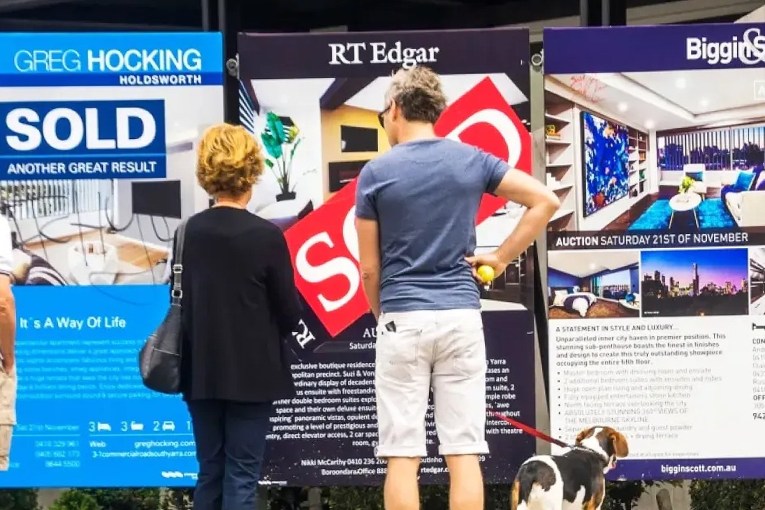
Mr Morrison didn’t think that was a lot of money when he and the Prime Minister ruled out touching negative gearing and the capital gains tax concessions in April last year.
Those two tax breaks together put a bigger hole in the federal budget than Mr Morrison’s $13.2 billion in unpassed savings measures.
The Australia Institute estimated in its submission to the 2014 Senate housing affordability inquiry that: “The combined cost of these policies places significant pressure on the federal budget. Negative gearing costs the budget between $2.6 and $3.6 billion per year while the capital gains discount will cost $4.3 billion in 2013-14.”
That’s about $28 to $32 billion over the forward estimates – or more than double the savings Mr Morrison is looking for.
Those figures do require some revision, however. Lower interest rates can lower the cost to taxpayers of negative gearing refunds, and any future property price correction would reduce the amount of tax handed back to property investors through the CGT discount.
But for now it is safe to say that reducing or tapering away the negative gearing and CGT tax hand-backs is a better way to budget nirvana than raising headline tax rates.
Who pays?
There is one group that would be overwhelmingly disadvantaged by such changes – the children of the most avid users of the property tax concession, who are also the biggest users of super tax concessions to pass wealth on to the next generation. Their kids would inherit a fair bit less if Mum and Dad’s top marginal tax rate didn’t come with such enormous opt-out options.
The benefits of the two property tax concessions are skewed heavily towards wealthier Australians for a simple reason – the higher one’s effective tax rate, the higher the refunds available.
People who don’t believe in a progressive tax scale might think that’s fair, but middle-income Australians may wonder why the ATO publishes a progressive tax scale when it is so easily avoided by the top end of town.
Mr Morrison doesn’t need to raise tax rates. He just needs to plug the giant leaks in the system that are there.